
Game design
How to get more players on your Fortnite map (Discover explained)
By Aeon12 min read
On this page
- 1. Get seen: where Discover shows your island
- Your starting ground: New & Updated
- 2. Get clicked: a thumbnail people want to click
- What a player sees in two seconds
- Show the outcome, not the start
- 3. Turn the click into a player: your island page
- 4. The first 30 seconds: make them stay
- 5. Keep them playing
- 6. Bring them back
- How Discover ties it together
- Track what works
- FAQ
- Why does nobody play my Fortnite map?
- What is a good CTR for a Fortnite map?
- Does sharing my island code help?
- How long does it take before Discover picks up my map?
Fortnite shows your island to players through Discover, the rows of islands on the Fortnite home screen. Every player goes through the same steps: they see your thumbnail, click it, decide on your island page whether to play, decide in the first 30 seconds whether to stay, keep playing or leave, and maybe come back tomorrow. Discover watches every step and shows your island to more players when they go well. So getting more players means finding the step where you lose them, and fixing it.
The player’s journey
In Discover
Seen & clicked
Discover row, thumbnail, title.
After the click
Play or back
Island page: images, trailer.
First 30 seconds
Stay or leave
Do they get it right away?
During the session
Keep playing
Progress, goals, one more round.
The next day
Come back
Saved progress, daily rewards, updates.
1. Get seen: where Discover shows your island
Before anyone plays your map, Discover has to put it in front of them. Every time a player sees your island in a Discover row, that’s an impression. A new island starts with a small number of impressions; when players click and stay, Discover pushes it into more and bigger rows.
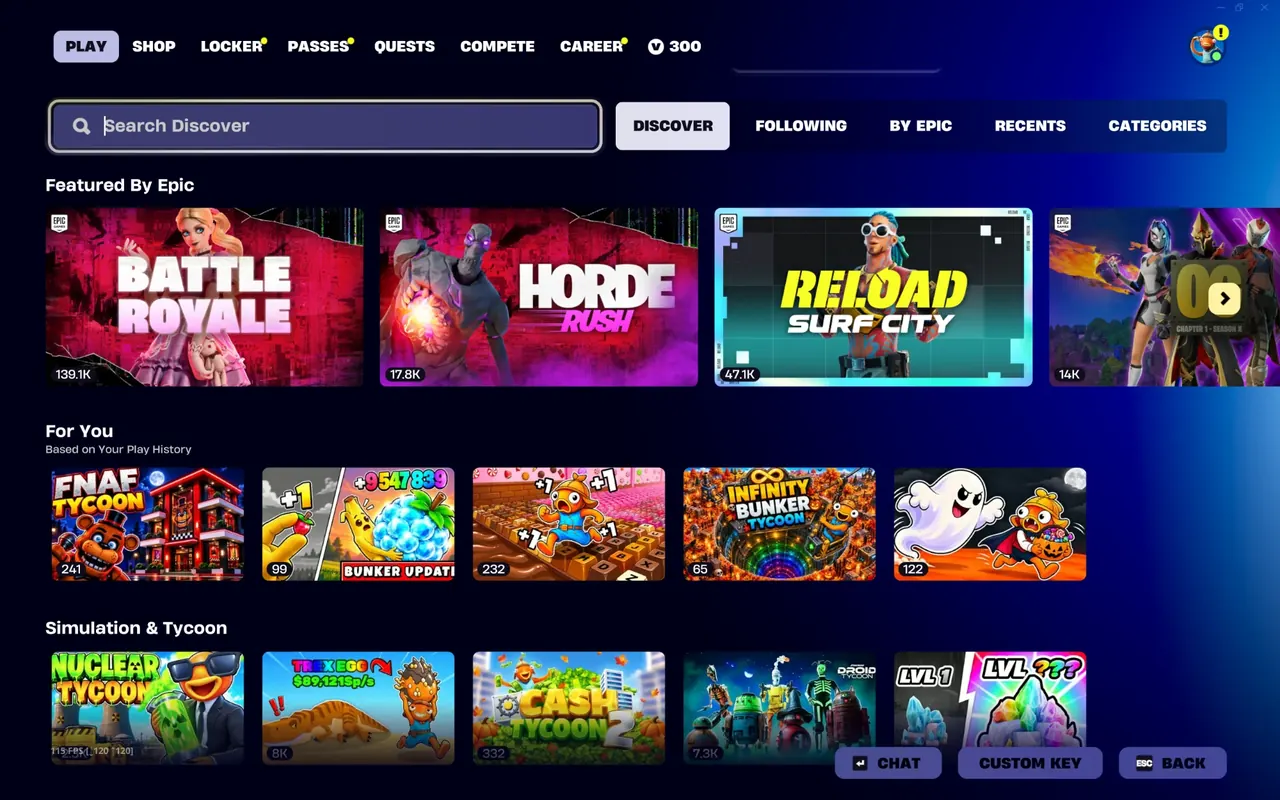
Which row you’re in matters. Discover has different kinds of rows:
- Featured By Epic: Epic’s own picks, the biggest audience you can get.
- For You: personal picks based on a player’s play history. Players here already like games like yours.
- Genre rows like Simulation & Tycoon: players browsing one kind of map.
A big general row reaches lots of players who weren’t looking for your genre; a personal or genre row reaches players who already like that kind of map. That changes how many of them click, which is the next step.
Your starting ground: New & Updated
For most maps, the first row is New & Updated. When you publish or update your island, Epic normally pushes it there for a short test. From our experience, a map usually stays in New & Updated for only 10 to 40 minutes, and the longer you stay, the better. How well you score there seems linked to how sophisticated your map is.
- in New & Updated
- 10–40 min
- in New & Updated
- how long a map usually stays there, from our experience
- between meaningful updates
- 96 h
- between meaningful updates
- our rhythm to get another chance
During that test, Discover reads how many players you got and how well your map did with them. If the numbers are good, it may push you into bigger rows that reach more players and last much longer.
How a map climbs (from our experience)
- 1
Push a meaningful update
Something that really changed for players, not a moved prop.
- 2
Get tested in New & Updated
Usually 10 to 40 minutes of extra impressions.
- 3
Discover reads your results
How many players clicked, how long they stayed, how well the map did.
- 4
Bigger, longer-lasting rows
Good results can get you pushed into rows that keep bringing players for much longer.
2. Get clicked: a thumbnail people want to click
Even before players join your map, they see your thumbnail. Your thumbnail and title are the only things a player sees before they decide, and that makes them your click-through rate (CTR): the share of players who see your island and click it.
Clicks for every 1,000 players who see your thumbnail
- 1% CTR · normal in big, broad rows10 players
- 2.5% CTR · pretty good in genre & For You rows25 players
- 5% CTR · great50 players
What a player sees in two seconds
A player doesn’t read Discover, they scan it. This is roughly how a player who likes tycoons might look at the same screen, and what goes through their head:
Show the outcome, not the start
The strongest thumbnails sell a feeling. Show how euphoric the player will be when they play your game: the outcome, the moment they’re powerful, rich or at the top. How happy will they be, and how much status will they have when they reach the endgame? That’s what makes someone click.
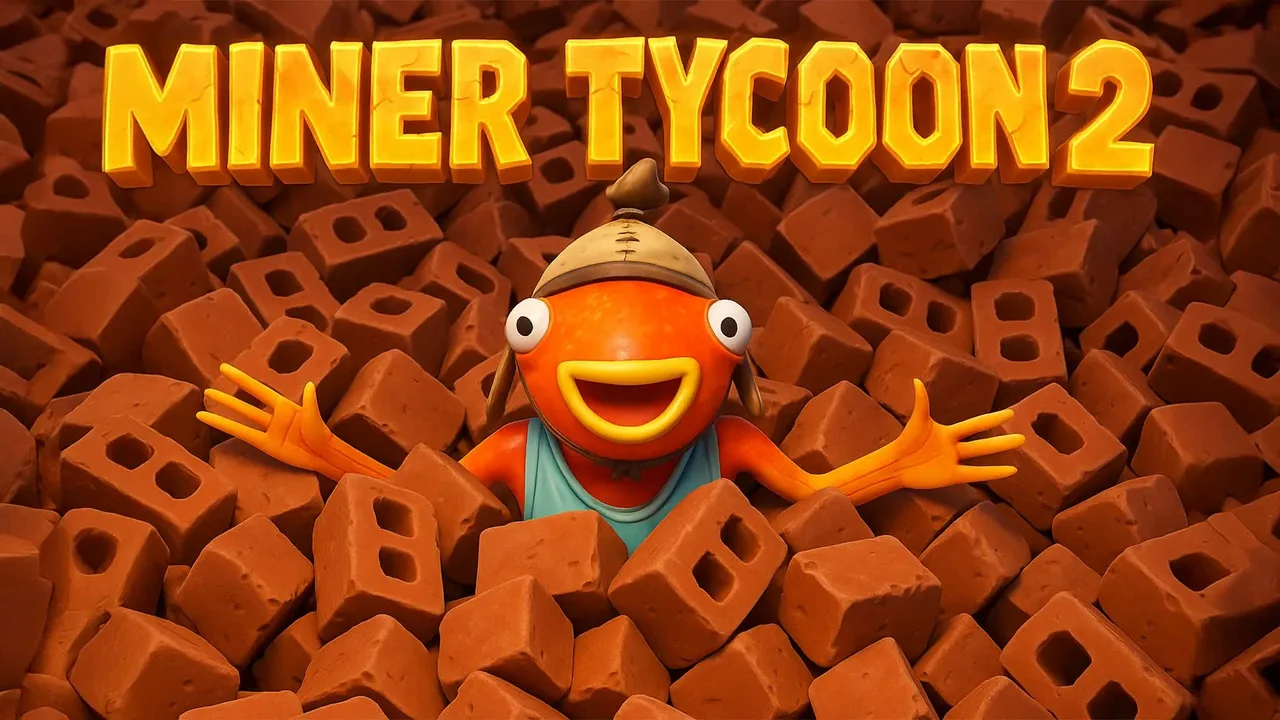 ✕ Weaker
A happy character, but no goal and no reward: a pile of plain bricks doesn’t show what you get from playing.
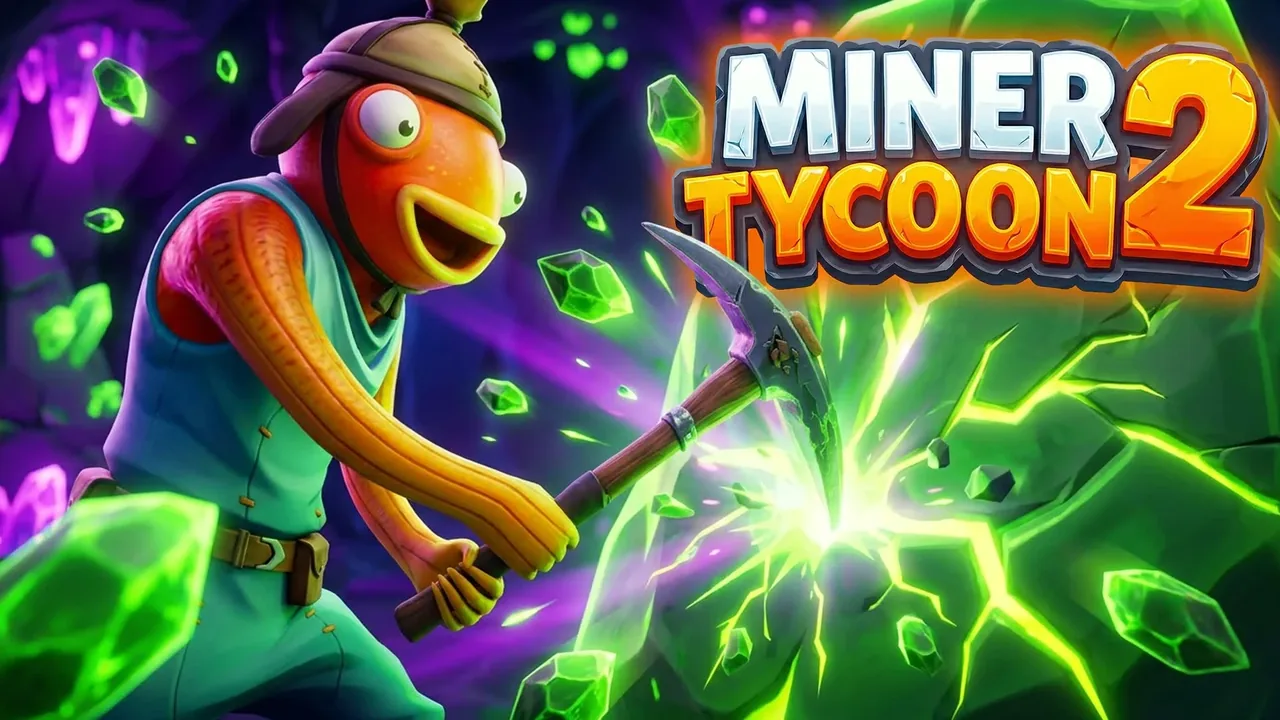 ✓ Stronger
The payoff moment: cracking a glowing rare crystal. Action, reward and the feeling of getting powerful, in one image.
A thumbnail that gets clicks
- Shows the outcome: the reward, the power, the endgame
- Shows the actual gameplay, not just a logo
- One clear subject, readable on a phone screen
- Two or three words of text at most
- Bright, high-contrast colours
- Matches what players find when they load in
A misleading thumbnail gets clicks but kills the next steps: players who feel tricked leave in the first 30 seconds.
3. Turn the click into a player: your island page
A click isn’t a player yet. After clicking, players land on your island page: a big image carousel or trailer, and the island’s info. Here they decide again: Select and play, or Back to the next island. Your thumbnail gets the click; your island page decides whether that 2.5% CTR also becomes 2.5% of players actually playing your game.
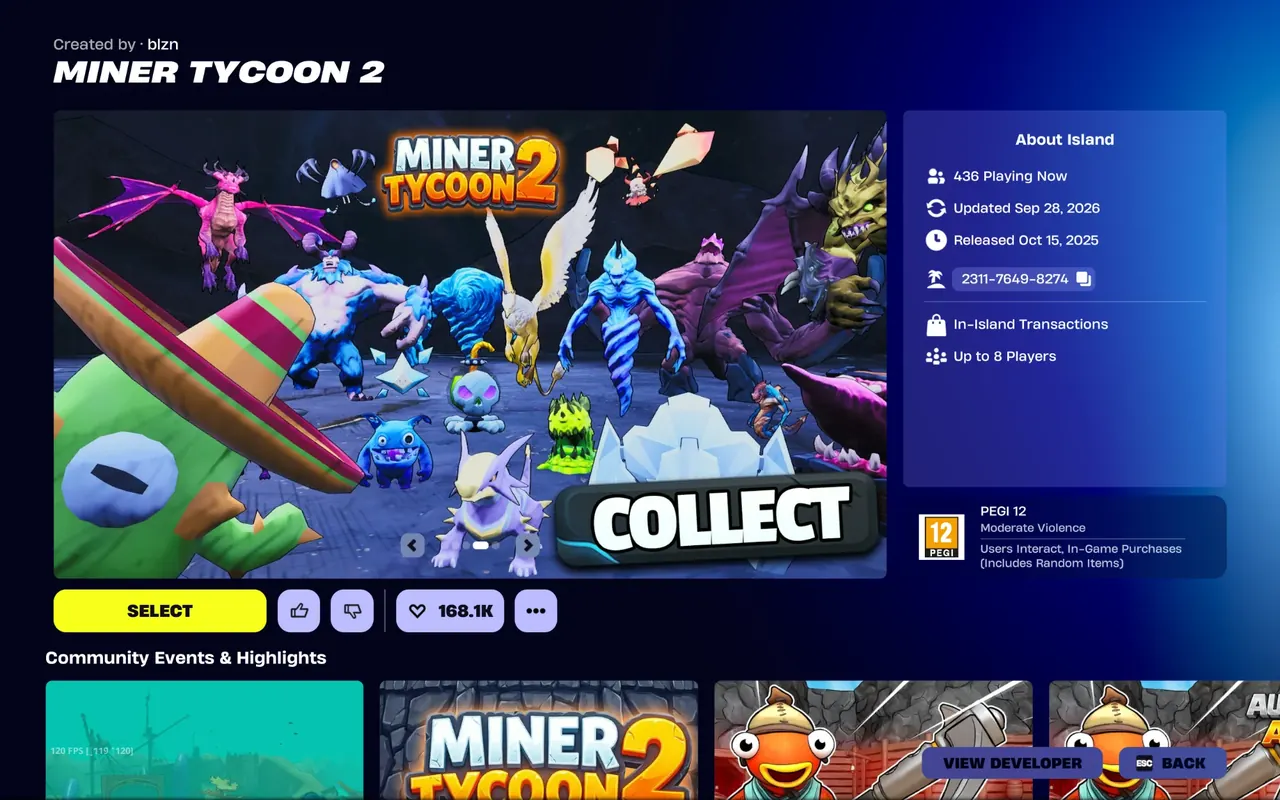
Out of 25 players who click (example)
- Weak island page · one vague image10 play
- Strong island page · clear images, short trailer22 play
An island page that convinces
- The first image explains the game at a glance
- One idea per image: COLLECT, UPGRADE, TRADE…
- Big words, readable on a phone
- A short trailer with gameplay in the first seconds
- The same promise as your thumbnail
- Recent updates, so players see the map is alive
4. The first 30 seconds: make them stay
Once players are in your island, the clock starts. Most players who leave do it right after loading in: a confused player leaves, and that hurts how often Discover shows your island.
The first 30 seconds
- 1
Spawn them where the action is
No long walks, no empty lobby. Gameplay within seconds.
- 2
Show the goal right away
One HUD line: what to do and why. "Reach the top", "Get 10 eliminations".
- 3
Give a quick win
A first reward or level-up in the first minute makes players want the next one.
- 4
Explain later, not first
Teach mechanics while playing instead of with a wall of text.
5. Keep them playing
Players who made it past the first minute decide how long they stay. The longer they play, the more playtime you earn and the better Discover ranks you. Systems that give players a reason to keep going:
- Progression: levels, ranks, unlocks that are always just within reach.
- Short rounds that chain: "one more round" beats one long match.
- A visible goal: the endgame from your thumbnail, and how far they are from it.
Playtime is also what you get paid for: see how UEFN creators make money.
How playtime turns into money
Minutes played per day
300,000
Average CCU
208
- Engagement payout · 1,000 minutes played ≈ $1$300 / day
- In-island sales, basic · $400 a day per 1,000 CCU$83 / day
- In-island sales, optimized · $1,000 a day per 1,000 CCU$208 / day
Together, per month
$11,500 – $15,250
6. Bring them back
A player who comes back tomorrow is worth more than a new one: returning players count extra for Discover and for your payout. Give them a reason to open your island again:
- Saved progress: nobody returns to a map that forgot everything.
- Daily rewards and quests: a reason to log in today, and a streak to keep.
- Regular updates: something new for returning players, and a sign to Discover that your island is alive. Small, regular updates beat one big update every few months.
You don’t have to build these from scratch: our UEFN systems are ready-made versions you can modify for your own map.
Our own rhythm: a new, meaningful update every 96 hours, where something actually changed for players. That keeps returning players busy and gives Discover a reason to test the island again.
How Discover ties it together
Every step above feeds the same signals. Epic doesn’t publish the exact formula, but these are the ones Epic and experienced creators point to:
What Discover looks at (relative weight is our estimate)
- Click-through rate · step 2: thumbnail + titleHigh
- Retention · steps 4 & 6: stay and come backHigh
- Session length · step 5: minutes per visitHigh
- Concurrent players · all steps togetherMedium
- Recent updates · step 6: freshnessMedium
Good signals bring more impressions in bigger rows (step 1), which bring more players into the same loop. That’s why fixing the weakest step has the biggest effect.
Track what works
In the Creator Portal you can see your island’s analytics: impressions, CTR, playtime and retention. That’s the player’s journey in numbers. Find the step where you lose the most players, change one thing (a new thumbnail, a faster start) and compare a week before and after.
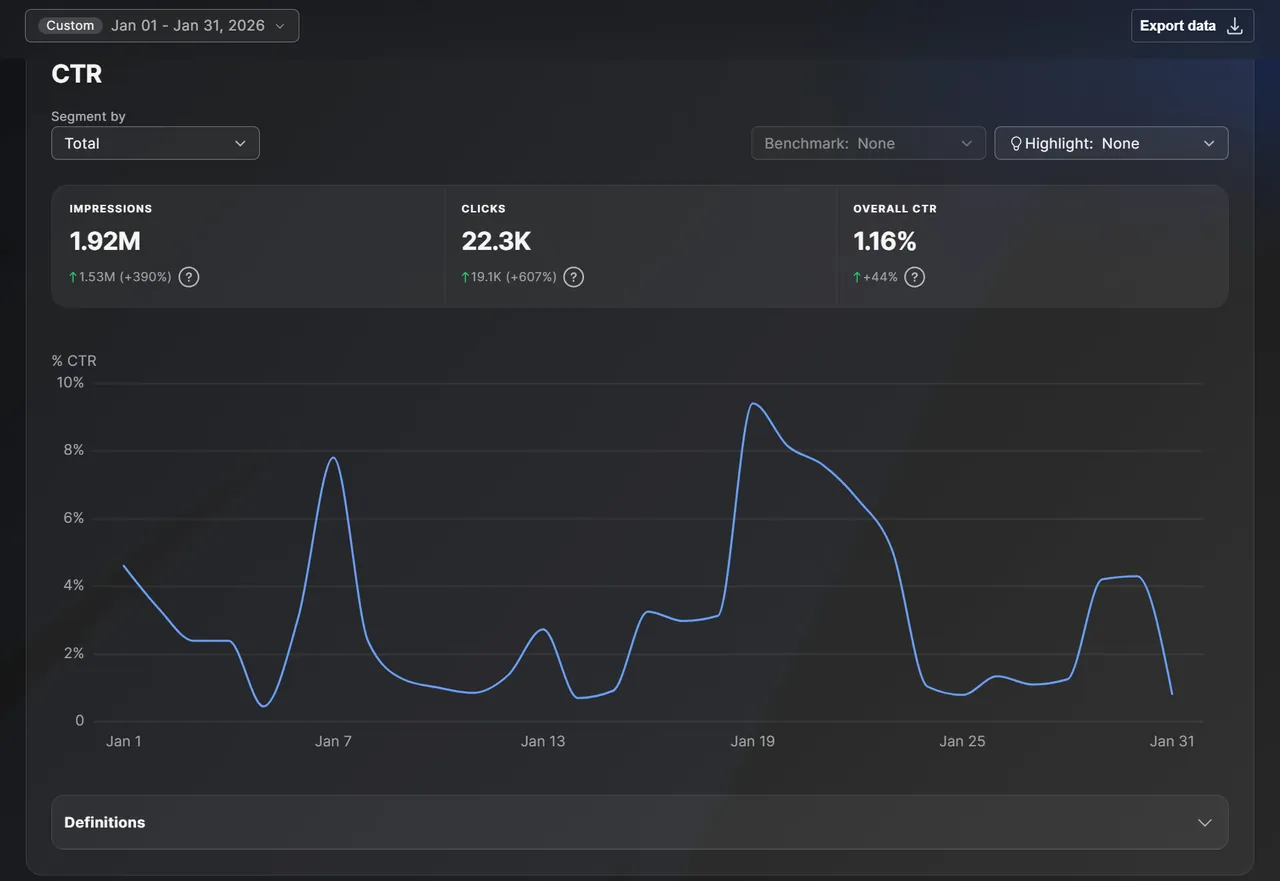
Look at what this month shows: 1.92 million impressions, 22.3K clicks and an overall CTR of 1.16%, but the daily CTR swings from below 1% to over 9%. From our experience that’s mostly the Discover rows at work: on some days the island was shown to a huge, broad audience (lots of impressions, low CTR), on others to players who were looking for exactly this kind of map. Don’t judge your thumbnail on one day; compare whole weeks, and look at clicks next to CTR.
FAQ
Why does nobody play my Fortnite map?
Usually because Discover showed it to a small group and those players didn’t click or didn’t stay. Improve your thumbnail first (more clicks), then your first 30 seconds (more players stay).
What is a good CTR for a Fortnite map?
From our own maps: around 2.5% is pretty good in genre and For You rows, and around 1% is already normal in big, broad rows. Over a whole month that mix can land around 1%, like the 1.16% in our screenshot above, while still bringing in tens of thousands of clicks.
Does sharing my island code help?
Yes. Players you bring yourself (YouTube, TikTok, Discord) add playtime and CCU, which are the same signals Discover looks at.
How long does it take before Discover picks up my map?
Honestly, it’s difficult to say: it’s different for every map. But if you keep updating and you’re fully committed to your map, you will get there, and you will get pushed.